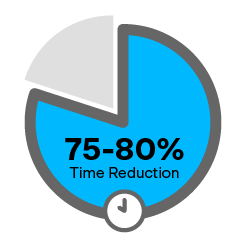
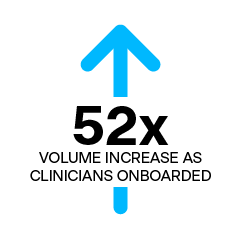
ENT medical transcription Picture this: It’s 6 PM on a Friday, and your admin team is still at their desks, racing against the clock to clear the week’s backlog of patient letters. Sound familiar? For one of Australia’s largest Ear, Nose and Throat specialist practices, this scenario was playing out every single week. With a high patient volume and complex cases requiring detailed correspondence, their documentation workflow had become a significant bottleneck. The numbers were stark: Something had to change. This ENT practice wasn’t looking for just any transcription service. As specialists dealing with complex medical terminology, anatomical references, and intricate procedure descriptions, they needed a solution that could: After evaluating various options, they chose Dict8ion for its unique combination of AI-powered transcription and human oversight – ensuring both efficiency and accuracy. July 2024: Early Adoption Phase The practice began their Dict8ion journey with realistic expectations. Like any workflow change, there was an initial learning curve. Processing times started at around 50 hours, but the team could already see the potential. What set this implementation apart was Dict8ion’s approach: 2025: Mature Usage Emerges By early 2025, the practice had found its rhythm. Average processing times dropped to 29 hours – a 42% improvement from their starting point. But this was just the beginning. The real magic happened as the team became more proficient with the system and Dict8ion’s AI learned their specific patterns and preferences. August 2025: Latest Performance The most recent data tells an extraordinary story: processing times now consistently fall between 9-12 hours. That’s a 75-80% improvement from where they started. Letter processing time once letters are uploaded to Dict8ion then completed over a 13 month period Let’s break down the impact of saving 38-41 hours per processing cycle: What makes this case study particularly compelling isn’t just the initial improvement – it’s the continuous optimization. The practice didn’t just implement Dict8ion and maintain status quo; they’ve continued to refine their processes. This demonstrates several key success factors: The practice embraced the technology fully, allowing their team to develop proficiency over time. Regular monitoring of processing times enabled continuous improvement and identification of further efficiencies. Rather than replacing human expertise, Dict8ion amplified it, allowing the admin team to focus on quality control and patient communication. As patient volume grew, the system scaled seamlessly without proportional increases in processing time. This ENT practice’s journey offers valuable insights for other specialist practices considering workflow optimization: Transformation doesn’t happen overnight. This practice saw gradual improvement over 13 months, with the most dramatic gains coming after they’d fully integrated the system into their workflow. The most sophisticated technology is only as good as its implementation. Success came from commitment to the process and allowing time for optimization. Regular tracking of key metrics enabled this practice to identify opportunities for further improvement and celebrate their success. Dict8ion worked because it enhanced existing workflows rather than forcing wholesale changes to established processes. This case study represents more than just one practice’s success story – it’s a glimpse into the future of medical documentation. As healthcare becomes increasingly complex and patient volumes continue to grow, practices that embrace intelligent automation will have a significant competitive advantage. The combination of AI efficiency and human expertise creates a powerful synergy that benefits everyone: doctors can focus on clinical care, admin staff can engage in more meaningful work, and patients receive faster, more accurate communication. The results speak for themselves: 75-80% improvement in processing times, 52x increase in capacity, and sustained excellence over thousands of patient letters. If your practice is struggling with documentation bottlenecks, staff overwhelm, or inconsistent turnaround times, this case study demonstrates what’s possible with the right approach and technology. Your documentation workflow doesn’t have to be a constraint on your practice’s growth. Ready to discover how Dict8ion can transform your specialist practice? Contact us today for a free consultation and see how leading practices are revolutionising their documentation workflows. About Dict8ion: Dict8ion combines AI-powered transcription with human oversight to deliver accurate, timely patient letters for specialist practices across Australia. Our solution integrates seamlessly with existing workflows while delivering measurable improvements in efficiency and consistency. For more information on how Dict8ion’s AI transcription can streamline your patient letter workflow contact us today!How One Large Australian ENT Practice Cut Patient Letter Processing Time by 80%
A 13-month journey from 50+ hours to just 9-12 hours per processing cycle
The Challenge: Drowning in Documentation
The Search for a Solution
The Implementation Journey
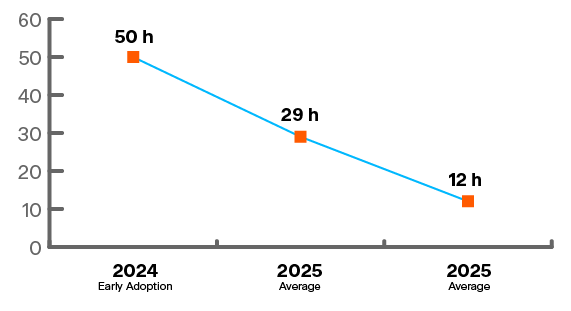
The Numbers That Tell the Story
Processing Time Evolution
Key Performance Improvements
What This Means in Real Terms
For the Practice
For the Doctors
For the Admin Team
The Secret to Sustained Success
1. Commitment to the Process
2. Data-Driven Optimization
3. Human-AI Collaboration
4. Scalable Solution
Lessons for Other Specialist Practices
Start with Realistic Expectations
Invest in Training and Adoption
Monitor and Measure
Focus on Integration, Not Disruption
The Future of Medical Documentation
Ready to Transform Your Practice?